

Kingdom foundations · 01 of 21
Nebuchadnezzar’s image
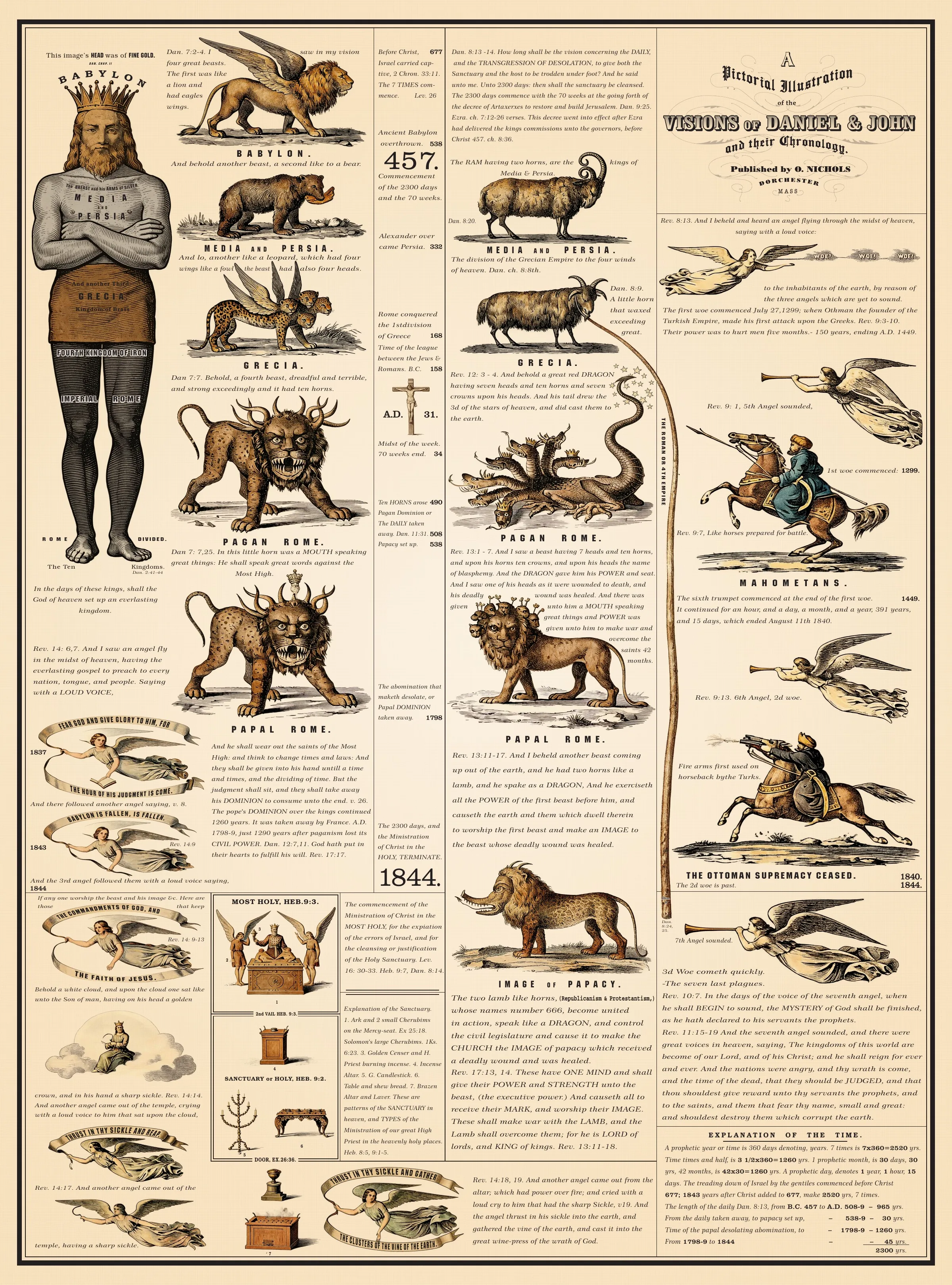
King Nebuchadnezzar of Babylon was given a dream in which he saw a statue made of different metals. Daniel, a captive from Israel, who served in the king’s court as one of his wisest counsellors, interpreted the dream for him.
The head made of gold was King Nebuchadnezzar himself and the kingdom of Babylon that he represented. Gold was indeed a metal prolifically used by the Babylonians in their magnificent city. But it would not last forever.
Another kingdom, symbolized by silver, a metal inferior to gold, would conquer Babylon. This happened when Medo-Persia took over the then-known world in 539 BC. Following that, the kingdom of Grecia became the world ruler, and their metal of choice was brass.
Greece in turn was conquered by Rome, which ruled with a rod of iron. But in 476 AD, Rome became divided by barbarian tribes of the north and east. Eventually the Roman Empire split into ten divisions that made up the different countries and cultures of Europe. Of course today, there are even more as they have splintered even further. This division was shown on the statue as a mixture of iron and clay, which is not very cohesive, and Europe has never succeeded in uniting into one empire.
At the feet of the statue we see the words “Rome Divided” by the ankles and then “the ten kingdoms Daniel 2:41,44” with the words “In the day of these kings, shall the God of heaven set up an everlasting kingdom” beneath.
Though some believe the ten-part division of Pagan Rome is represented by the ten toes, a closer look reveals that this cannot be.
Remember that the statue represents a timeline of kingdoms. The splitting of the Roman Empire into ten tribes (and more) happened on the statue-timeline where the iron gave way to the iron-and-clay mixture (in other words, at the ankles), whereas the ten toes are at the very end of the timeline, indicating that they are still in the future. The angel says definitively that both the feet and the toes, not just the toes, are made of iron and clay. The ten divisions of Rome that came into being at the ankles correspond to the ten horns on the fourth beast of Daniel 7:24 and Revelation 13:1. And while it is true that Europe was divided at first into ten divisions, it soon became more and more divisions and never were they able to cleave together, just as the Bible said would happen.
Pagan Rome gave way to Papal Rome which ruled for 1260 years. If the ten toes represent the divisions of Rome into ten or more European nations, then they are placed incorrectly on the statue timeline - as the ten divisions did not take place after Papal rule, but rather just before, at the fall of Pagan Rome.
Therefore, these ten toes correspond to Revelation 17 where it speaks of ten kings who do not have a kingdom as yet but will reign with the “beast” just before Jesus comes. The ten toes represent these ten regions or divisions that will be part of the final system that will exist in the final days of earth’s history at the time just before Christ returns and are symbolized by the horns of Revelation 17:12-14. You can learn more about this in our Revelation studies. The image of the beast will consist of ten divisions just as the beast (the Papacy) ruled over ten divisions, and in fact the whole world.